Field
Reports

News: ‘General’ Archive

City dwellers have smaller carbon footprints, study finds | guardian.co.uk

Tuesday, March 24th, 2009

‘The image of cities is often traffic-clogged, polluted and energy-guzzling, but a new study has shown that city dwellers have smaller carbon footprints than national averages.

…In the US, New Yorkers register footprints of 7.1 tonnes each, less than a thrid of the US average of 23.92 tonnes.’

via City dwellers have smaller carbon footprints, study finds | Environment | guardian.co.uk.

Professor Lord Nicolas Stern video excerpt from Copenhagen.

Tuesday, March 17th, 2009

March 12, 2009 Copenhagen, Denmark

Excerpt from Professor Lord Nicolas Stern’s plenary address at the Climate Conference:

Excerpts:

“This is about a choice between patterns of development which look extremely different… these are about very different kind of choices so we have to bring the right kind of economics to bear…

The third feature of this story is that it is a flow stock problem, the flows each year build up into stocks, and the stocks of greenhouse gasses trap the heat and cause the problem of climate change. That of course is a very big part of the story, and it comes directly from the simple science of the story.

But it tells us some very powerful lessons for economics as well here, it tells us the costs of delay are very big. This is not a WTO negotiotiation which if it falls apart one year you pick it up again five years later and your more or less in the same position that you were before.

If you delay this one, because its a flow stock process, the stocks build up and you start in a significantly worse position with a five or ten year delay. Now these are all very powerful lessons for economic analysis from the simple structure of the science, and those are what we have to take on board if were translating the economics into policy.”

UC Berkeley Professor Dan Kammen at the Copenhagen Climate Conference

Friday, March 13th, 2009

March 12 2009. Professor Dan Kammen (left) speaks about energy efficiency and the ‘green new deal’ to a large audience and to Danish Prime Minister Anders Fogh Rasmussen (right) during a panel discussion at the closing plenary session of the Copenhagen Climate Conference.

Another excerpt from the dialogue. Here Dan Kammen links insufficient carbon emission reductions to climate injustice with associated negative consequence for the worlds poorest:

6 Key Messages: Conclusions from the Copenhagen Climate Change Conference

Thursday, March 12th, 2009

Key Messages from the Congress

12 March 2009

Copenhagen, Denmark: Following a successful International Scientific Congress Climate Change: Global Risks, Challenges & Decisions attended by more than 2,500 delegates from nearly 80 countries, preliminary messages from the findings were delivered by the Congress’ Scientific Writing Team. The conclusions will be published into a full synthesis report June 2009. The conclusions were handed over to the Danish Prime Minister Mr. Anders Fogh Rasmussen today. The Danish Government will host the UN Climate Change Conference in December 2009 and will hand over the conclusions to the decision makers ahead of the Conference.

The six preliminary key messages are:

Key Message 1: Climatic Trends
Recent observations confirm that, given high rates of observed emissions, the worst-case IPCC scenario trajectories (or even worse) are being realised. For many key parameters, the climate system is already moving beyond the patterns of natural variability within which our society and economy have developed and thrived. These parameters include global mean surface temperature, sea-level rise, ocean and ice sheet dynamics, ocean acidification, and extreme climatic events. There is a significant risk that many of the trends will accelerate, leading to an increasing risk of abrupt or irreversible climatic shifts.
Key Message 2: Social disruption
The research community is providing much more information to support discussions on ‘dangerous climate change’. Recent observations show that societies are highly vulnerable to even modest levels of climate change, with poor nations and communities particularly at risk. Temperature rises above 2oC will be very difficult for contemporary societies to cope with, and will increase the level of climate disruption through the rest of the century.
Key Message 3: Long-Term Strategy
Rapid, sustained, and effective mitigation based on coordinated global and regional action is required to avoid ‘dangerous climate change’ regardless of how it is defined. Weaker targets for 2020 increase the risk of crossing tipping points and make the task of meeting 2050 targets more difficult. Delay in initiating effective mitigation actions increases significantly the long-term social and economic costs of both adaptation and mitigation.
Key Message 4 – Equity Dimensions
Climate change is having, and will have, strongly differential effects on people within and between countries and regions, on this generation and future generations, and on human societies and the natural world. An effective, well-funded adaptation safety net is required for those people least capable of coping with climate change impacts, and a common but differentiated mitigation strategy is needed to protect the poor and most vulnerable.
Key Message 5: Inaction is Inexcusable
There is no excuse for inaction. We already have many tools and approaches (economic, technological, behavioural, management) to deal effectively with the climate change challenge. But they must be vigorously and widely implemented to achieve the societal transformation required to decarbonise economies. A wide range of benefits will flow from a concerted effort to alter our energy economy now, including sustainable energy job growth, reductions in the health and economic costs of climate change, and the restoration of ecosystems and revitalisation of ecosystem services.
Key Message 6: Meeting the Challenge
To achieve the societal transformation required to meet the climate change challenge, we must overcome a number of significant constraints and seize critical opportunities. These include reducing inertia in social and economic systems; building on a growing public desire for governments to act on climate change; removing implicit and explicit subsidies; reducing the influence of vested interests that increase emissions and reduce resilience; enabling the shifts from ineffective governance and weak institutions to innovative leadership in government, the private sector and civil society; and engaging society in the transition to norms and practices that foster sustainability.

Copenhagen Climate Conference Begins, 'Climate Change, Global Risks, Challenges and Decisions'

Monday, March 9th, 2009

Copenhagen, Denmark. March 10, 2009

Today a three day conference on climate change begins here in a drizzly and cold, yet still ‘wonderful’ Copenhagen. This event is part of the build up to the pivotal November-December COP-15 meetings which will attempt to draft a new international agreement to replace the Kyoto protocol which is due to expires in 2012.

A major goal of this conference is to present the new scientific evidence and findings since the IPCC report of 2007. Since much of that report was based on work from 2006, there are essentially three years of work to review and then present to the policy makers attending the November-December meetings.

The program of speakers and scientists, including Dr. James E. Hansen of NASA, covers a dense collection of scientific and relevant social topics ranging from ‘cryosphere, instability, seal level rise’, ‘vulnerability in carbon sinks’, to ‘sustainable urban deveolopment’. Promises to be quite an education.

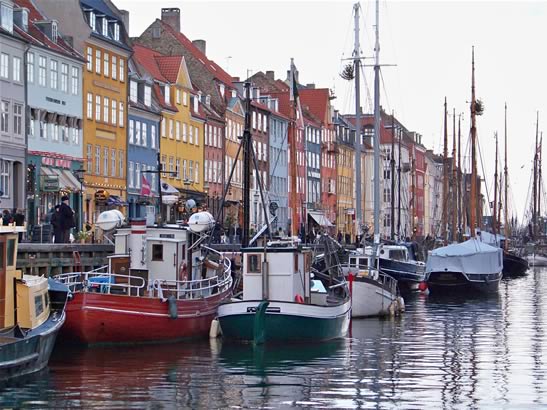
Image: Copenhagen harbor Nyhavn where Hans Christian Anderson once lived.
Copenhagen harbor Nyhavn where Hans Christian Anderson once lived.

Copenhagen Climate Conference Begins, ‘Climate Change, Global Risks, Challenges and Decisions’

Monday, March 9th, 2009

Copenhagen, Denmark. March 10, 2009

Today a three day conference on climate change begins here in a drizzly and cold, yet still ‘wonderful’ Copenhagen. This event is part of the build up to the pivotal November-December COP-15 meetings which will attempt to draft a new international agreement to replace the Kyoto protocol which is due to expires in 2012.

A major goal of this conference is to present the new scientific evidence and findings since the IPCC report of 2007. Since much of that report was based on work from 2006, there are essentially three years of work to review and then present to the policy makers attending the November-December meetings.

The program of speakers and scientists, including Dr. James E. Hansen of NASA, covers a dense collection of scientific and relevant social topics ranging from ‘cryosphere, instability, seal level rise’, ‘vulnerability in carbon sinks’, to ‘sustainable urban deveolopment’. Promises to be quite an education.

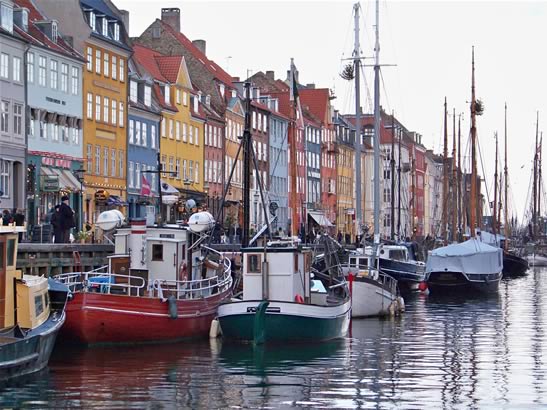
Image: Copenhagen harbor Nyhavn where Hans Christian Anderson once lived.
Copenhagen harbor Nyhavn where Hans Christian Anderson once lived.

Brazil goes to war against logging : Nature News

Sunday, March 8th, 2009

‘Brazilian President Luiz Inácio Lula da Silva (Lula) mounted a military-style crackdown on deforestation in the Amazon in January — just a month after the government proclaimed that deforestation rates had dropped 59% over the previous three years. The action was prompted by alarming new satellite data from the National Institute for Space Research (INPE) in São José dos Campos, indicating that clear-cutting is once again on the rise.’

via Access : Brazil goes to war against logging : Nature News. (Requires login or payment)

Land Use and Density Affect Fires in Indonesia – NYTimes.com

Sunday, March 8th, 2009

An Indonesian example of the role of human agency in ‘natural’ disasters.

‘But a study in Nature Geoscience suggests that while drought may lead to the worst incidences of burning, land use and population density also play roles’

via Observatory – Land Use and Density Affect Fires in Indonesia – NYTimes.com.

Why 2007 I.P.C.C. Report Lacked ‘Embers’ – Dot Earth Blog – NYTimes.com

Thursday, March 5th, 2009

A glimpse into some of  the politics behind the science:

‘Several authors of the 2007 report by the Intergovernmental Panel on Climate Change on the projected effects of global warming now say they regret not pushing harder to include an updated diagram of climate risks in the report. The diagram, known as “burning embers,” is an updated version of one that was a central feature of the panel’s preceding climate report in 2001. The main opposition to including the diagram in 2007, they say, came from officials representing the United States, China, Russia and Saudi Arabia.’

via Why 2007 I.P.C.C. Report Lacked ‘Embers’ – Dot Earth Blog – NYTimes.com.

Should Economic Stimulus Bill Include Billions for Nuclear Power? | Democracy Now!

Friday, February 6th, 2009

Nuclear power debate – an interesting read:

‘A coalition of environmental groups are calling on senators to remove a controversial provision from the $900 billion stimulus bill that could lead to the construction of a new generation of nuclear power plants. We host a debate between independent journalist and longtime anti-nuclear activist Harvey Wasserman and Patrick Moore, a Greenpeace co-founder and member of the pro-nuclear Clean and Safe Energy Coalition.

…HARVEY WASSERMAN: Well, there’s no reason for the United States taxpayers to get stuck with another $50 billion tab for building new reactors that Wall Street won’t fund. Nuclear power has failed utterly in the marketplace, and it’s back at the taxpayer trough trying to get more money.’

See complete article: Democracy Now! | Should Economic Stimulus Bill Include Billions for Nuclear Power?.