April 19, 2013 Berkeley
Severin Borenstein, Director of the University of California Energy Institute, spoke at the Travers Conference on Ethics and Accountability, California’s Energy Future. Borenstein argued for a state energy and climate policy designed to encourage globally affordable, adoptable, and exportable green technical innovation in California. Such an approach could more effectively address global GHG emissions than the existing state based cap and trade policy which targets California’s own carbon footprint.
Transciption of Severin Borenstein’s lecture:
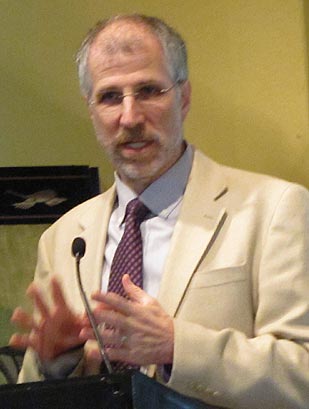
“How useful is it to have a goal of reducing California’s greenhouse gas emissions, if it’s not really going to be a useful example for elsewhere in the world?” ~ Severin Borenstein
“Thanks for inviting me, and thanks to the Travers family and for the support of this conference. I was going to spend some time summarizing the current state of energy and future options for California… ”
“What I want to do instead, or as well, is focus in some ways on the theme of this conference more generally, that is, the ethics and policy, and ask the question of, what, if we’re going to have an energy policy in California, what the goals should be? Let me start out by noting four distinct energy challenges that people talked about in California when you ask about what our goals are.”
“If we do something that allows us to reduce our greenhouse gas footprint, but the developing world looks at it and says, that’s so expensive there’s no chance we would ever adopt it, or that’s very California specific to some way we live in California, it’s really not going to be very useful in actually reducing greenhouse gases in a way that changes the world.”
“If we do something that allows us to reduce our greenhouse gas footprint, but the developing world looks at it and says, that’s so expensive there’s no chance we would ever adopt it, or that’s very California specific to some way we live in California, it’s really not going to be very useful in actually reducing greenhouse gases in a way that changes the world.”
“One is cost control and that the one that probably get the most media attention. I know personally every time the price of gasoline goes up I get to be on television saying the price of gasoline has gone up.”
“A second is local air pollution, and when I first became director of the University of California Energy Institute almost 20 years ago, that was a big focus, particularly on the transportation fuel side with emissions from cars. In 1995 we adopted a new form of cleaner burning gasoline that had has had a really dramatic impact on California air quality, and has addressed that quite significantly.”
“A third concern is energy security or independence, and I’m going to come back and talk about this a little more. It’s a term that is thrown around by lots of policymakers I would say more frequently than not without much understanding of what they mean by it.”
“And then finally, and the one that most people now think of when we talk about energy policy in California, is climate change, is addressing greenhouse gas emissions. It’s important to remember that a lot of the policy that’s in place now didn’t begin worrying about climate change, it started by worrying about these other factors and has actually changed over the years to be adapted to the issue of climate change.”
“Until probably five or six years ago, well probably seven or eight now, the focus in the state was primarily on cost control and local air pollution. In a sense that made sense at the time. They were things that we could definitely do something about. Since the 70s California has been, or actually the 60s, California has been very focused on air pollution from energy sources, and particularly tailpipe emissions from cars, and has in many ways been a leader in addressing those issues.”
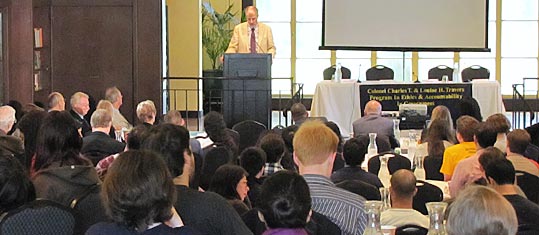
“If we do something that allows us to reduce our greenhouse gas footprint, but the developing world looks at it and says, that’s so expensive there’s no chance we would ever adopt it, or that’s very California specific to some way we live in California, it’s really not going to be very useful in actually reducing greenhouse gases in a way that changes the world.” – Severin Borenstein
[gray text areas were part of the talk but are not included in the edited video]
“When I became director of the Energy Institute in 1994, I actually had done a lot of work on the oil and gasoline side and very little electricity side, and I immediately had to go up and testify in Sacramento on electricity restructuring, because it was beginning of the electricity deregulation movement in California. The focus of that was primarily cost control, was primarily, how do we build out electricity and supply electricity needs while keeping costs as low as possible? That was all being done in the shadow of the Diablo Canyon nuclear power plant debacle that end up costing consumers in PG&E territory billions of dollars. And so there was a lot of discussion of, well, if we do this, would it actually reduce costs over time. A that was really were almost all of the discussion was focused, how do you make markets work efficiently to get costs down?”
“In the 1990s we saw electricity deregulation actually come into effect in California, starting in March in April 1998. We also moved as I mentioned to a cleaner burning gasoline in 1996, I was also a member of the Attorney Generals’ gasoline task force in 1999 investigating high gas prices. And so you can see that, a lot of the focus, almost all the focus then, was on high costs, and on pollution issues, local pollution issues.”
“Then we had the California electricity crisis in 2000 and 2001, and a large step back from electricity markets. We’ve had occasional gasoline price spikes ever since, most recently last fall, and although people seem to be less aware of this than the price spikes, we have persistently higher gasoline prices than in the rest of the country, not just because the taxes, even adjusting for taxes, our prices tend to run $.10-$.15 higher than the rest of the country.”
“We also have persistently cleaner tailpipe emissions than the rest of the country. Not as clean as they could be if we changed a few regulations, particularly taking the oldest heavy polluters off the road, but much cleaner than the emissions in the rest of the country due to the cleaner gasoline we use. And the effect of that has been shown to be very significant health improvements, and so that’s been a major victory in California environmental policy.”
“Starting shortly after the California electricity crisis the focus turned to greenhouse gases. In 2006 we passed the AB32, the California Global Warming Solutions Act and, we’ve taken a number of steps since then to move towards a lower greenhouse gas emissions energy system.”
“We passed the 20% renewable portfolio standard in 2002, that required that 20% of electricity come from the from renewable sources, and then we started debating what a renewable source is, and what the goal of this policy really should be. We increased it to 33% in 2011. The 2002 to 20% standard was supposed to be met by 2012, we didn’t quite make it, but we are pretty much there now. The 33% standard passed 2011 is a standard for 2020, and I think most people think that we can make that.”
“We had a number of other energy initiatives, the California Solar Initiative, which has subsidized or had rebates on residential and commercial installations of solar. We have two phases of standards for fuel economy in cars in California, to improve California fuel economy. We have a Low Carbon Fuel Standard [LCFS] that at least purports to improve the carbon footprint of the fuel that we use in our cars by mixing in more fuels that come from low carbon sources. We have for decades had energy efficiency programs in California, those programs continue, with new attempts to figure out what is most effective, and where the energy efficiency can be applied most efficiently.”
“And then most recently, last year, we began the California’s cap and trade program, which is a program to cap the total emissions of greenhouse gases from California, and then allow tradable permits to reallocate those emissions rights in a way that would reduce the cost of those greenhouse gas emissions reductions.”
“But of course California exists in a larger global context, and well, when we were worried about the cost of energy and doing specific things about energy production in California, and when we’re worried about local pollutants, we could largely do that on a state level basis and focus on what we need to do and ignore the rest of the world. We can’t really do that when we talk to greenhouse gases.”
“In fact, when we recognize, and I think most people do, that California’s greenhouse gas initiatives have to be thought of in the larger context, there are a number of different reactions, and it’s almost a Rorschach test. There are the people who say that, well, that just shows we can’t have any real effect and we shouldn’t bother having an energy policy as it pertains to greenhouse gases. There other people say we are morally obligated to clean up our own house, that we have been the source of very large greenhouse gases and we need to do something to address that.”
“A slight twist on that that I think is in some ways a more practical political application of it, is that we have to clean up our own house to have credibility with the rest of the world, that if we’re going to try to make a difference in the rest of the world, the first thing we have to do is lower our own carbon footprint.”
“It’s not clear to me how important that is in terms of being able to pressure the rest of the world, I don’t think California is in a political position to apply much pressure. I think more important is a demonstration effect, the idea that if California can clean up our greenhouse gas emissions, that we may be to show a path for others to do it.”
“The distinction may seem sort of fuzzy, but I think it’s actually critical, because when we think about policies, and this is where I’m going to go with this discussion, I think we need to think about, not, can California reduce our greenhouse gas footprint, or how should we get to a certain percentage, but what effect is that going to really have on climate change globally.”
“And I think the point of that is that, when we think about California Energy policy as it pertains to greenhouse gas emissions, the word that I have to keep coming back to is innovation.”
“What are we going to do that is going to spur innovation, that can be applied in the rest of the world? That isn’t just because California is a very small and declining share of world greenhouse gases, but because it’s important to keep our eye on policy objectives when we design policy.”
“Let me tell you two anecdotes of this. I was in a meeting at the National Renewable Energy Lab, I was actually on the conference call, but part of the meeting of about ten policy analysts about solar PV. And although the meeting was about greenhouse gases in the application of solar PV, it very quickly moved to a discussion of how do we maximize the amount of solar PV in the system, including some policies that I thought were really bad policies, in fact would take away from other initiatives that would probably be more effective in reducing greenhouse gases. But the problem was that almost all the other participants in this meeting were solar PV advocates, not greenhouse gas reduction advocates, and so their goal was to get as much solar PV into the market. Now their justification, if you really pressed them on it, at least the more sophisticated people, would be well, we need to do this, this is part of the effort to reduce greenhouse gases. But in my opinion, some of the things that they were suggesting actually were likely to undermine the overall goal of greenhouse gas reduction, in exchange for a very short run boost to installations in a certain area.”
“And I think a lot of the policies we now talk about have this problem, that they end up focusing on sub goals, which in some larger theoretical context may be part of the picture, but when applied incorrectly can actually undermine the important long-run goal, which as I said, I think from California’s standpoint, has to be innovation, it has to be creating the technologies that can change the rest of the world, not just reducing our footprint.”
“It will make us feel good if California can reduce our greenhouse gas footprint by 30%, 50%, or whatever. But if we do it in a way that isn’t exportable, it’s not going to have any effect on the rest of the world. Exportable both in terms of the technologies, and in terms of the demonstration effect. If we do something that allows us to reduce our greenhouse gas footprint, but the developing world looks at it and says, that’s so expensive there’s no chance we would ever adopt it, or that’s very California specific to some way we live in California, it’s really not going to be very useful in actually reducing greenhouse gases in a way that changes the world.”
“About ten years ago I was sitting in the office of a commissioner of a California organization, state organization, and I’m not can be any more specific than that, discussing the renewable portfolio standard with this commissioner, and I ask the commissioner, well, what’s the goal – this was shortly after or right around the time the first RPS was passed in 2002 – and I asked the commission, well, what’s the goal of the RPS? And the commissioner sort of came up short and looked at me like I was an idiot, and said well, of course it’s to reduce our reliance on foreign energy sources. That’s a laugh line for those of you who – California doesn’t, at the time and now, California actually doesn’t import energy from outside the country to produce electricity, and the RPS applied to electricity. The reduce our reliance on foreign energy sources generally applies the oil, and California even then used no oil to produce electricity. Being the smart ass I am, and being unable to help myself, the one thing that we did do at the time was import natural gas from Canada, so I said, ‘that’s right, you can’t trust those Canadians, they could turn on us at any moment’, and that didn’t receive a great response from this commissioner, but I think it really does make the point that this commissioner at least was deeply confused about what the goal of the RPS was, and what we might accomplish with it. ‘Cause the one thing we were definitely not going to accomplish with the RPS was reducing our reliance on foreign energy sources. There were lots of arguments for it, but that wasn’t it. But certainly if this commissioner – and this commissioner was – in a decision-making position at the time, you would want them to have an understanding of why we’re doing this in the first place.”
“So what is the goal now? Ultimately, I think it has to be, well, we still do have to worry about cost control, and well we still do have to worry about local air pollution, the primary focus is maintaining levels on those criteria while creating solutions to greenhouse gas emissions. I think that unfortunately the focus on reducing greenhouse gas emissions has been more in, how do we get California’s footprint down, than on, how do we become a laboratory for solutions that can be exported worldwide?”
“And there’s a lot there some overlap but I think it’s very easy to become focused on reducing California missions as the goal and as a result, lose track of where we really should be going.
“Cap and trade is an example of both the good and the bad I think here. When cap and trade was first passed as part of AB32 and implementation was discussed five years ago, most economists who studied this in California said, well it could be useful as a model for what the rest of the country can do, and potentially what we can do worldwide. Cap and trade in California alone was going to, and now does, have quite a few problems in running a market on a state level basis, due to the trade that occurs across state boundaries, and the inability of a state under the U.S. Constitution to actually control that trade.”
“On the other hand, if it actually set up a model that the country could follow, then when that new Democrat, or even Republican, in 2008 who believed in cap and trade – you may recall that both presidential candidates actually were pushing for cap and train in 2008 – got elected and pushed cap and trade, California in 2009 would be the example of how to do it.”
“Well you know the history since then, that new Democrat did get elected. We didn’t get cap and trade. If anything we’re further from it now than we were in 2007, probably a lot further, and we’ve gone ahead with the California cap and trade market.”
“Now I’m not going to say we should’ve suddenly shut it down, but we do have to think hard about what’s the goal now, and how useful is it to have a goal of reducing California’s greenhouse gas emissions, if it’s not really going to be a useful example for elsewhere in the world? Particularly because what we have learned from the California cap and trade market, is that it is very difficult to run a state level market.”
“Leakage, that is the movement of economic activity outside the state, is a tremendous problem. And a bigger problem is what’s called resource shuffling, a reshuffling. That is the case were nothing actually changes in physical activity or business activity, but purchases change. So if we now don’t buy our power from the coal-fired power plant in Utah, but that power plant continues to operate, and we buy our power from the hydro plant, and the people in Arizona buy their power from that coal plant, then all we’ve done is reshuffled the power, and had no effect on actual emissions.”
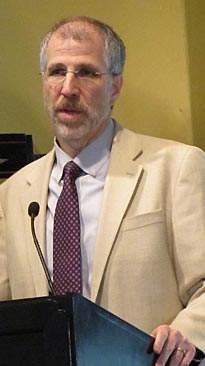 “Likewise this problem comes up with the low carbon fuel standard. If we put a different number on tar sands oil in terms of our greenhouse gas emissions than on light sweet crude from Texas, then we’re going to end up only buying gasoline made from the crude from Texas, but all that’s going to do is reshuffled the Canadian crude somewhere else.”
“There is a chance that will reduce the demand for Canadian crude a bit, but in a world oil market where there are plenty of people willing to buy it, it’s really not going to change total emissions. And there’s also a chance it could increase total emissions, if it increases the shipping cost, if it moves crude around in a way that’s less efficient than it was being moved around.”
“Likewise, the LCFS has a different standard for corn ethanol that’s made in a coal-fired refinery than is made in a gas-fired refinery. The stuff that comes out is exactly the same, but of course, if we buy the gas-fired ethanol, than somebody else buys the coal-fired ethanol. ”
“That’s not a critique of these programs so much as a recognition that on a state level it’s very hard to actually implement these policies. And I think that drives home the point that we need to be more focused on how do we actually create solutions that are exportable to the rest of the world.”
“People talk about how China is interested in cleaning up their greenhouse gas emissions. They generally in the process sort of confuse local air pollution and greenhouse gases. There’s no question China has a horrific local air pollution problem. There’s also is no question there are much less expensive ways to greatly address that than to move to renewables right now.”
“In fact, I take a very different conclusion from the whole China example. That is that, even in China, authoritarian country, it’s very difficult to corral all the governments. China’s national policy wants to do lots of things to reduce their coal-fired generation, and when you point out that their continuing to build new coal-fired power plants a lot of the answer is, they can’t get the local governments to cooperate.”
“I think that has to be a lesson to us of how difficult it is going to be to get worldwide cooperation that is not even get to be enough to get national cooperation among a lot of countries with very different incentives, because even if these countries agree it’s not clear their local governments are going to agree. ”
“You know I’d like to price carbon as much as any economist, possibly more than some, and possibly higher than most, but I become less and less optimistic that we’re going to be able to do it effectively. This is not an argument against it as a concept, but I think we have to be realistic about what we can really accomplish.”
“California has implemented a cap and trade program that is pricing carbon. I was reminded in talking to people in California of 1998 and electricity deregulation, when I was told by a politician that you only want to deregulated a market when you have a lot of excess capacity, so you can keep prices very low. Of course the whole point of deregulating a market is to let the market determine prices, and sometimes those prices will go up in order to incent, and that will incent new capacity.”
“We’re seeing a lot of the same discussion here – we want cap and trade, as long as the price is very low, and of course if the price gets high, well that’s not going to work. And so that led me to along with the recognition of leakage and reshuffling and the political resistance, to think about what should we be doing, and what can we do, and that again brings me back to innovation.
“So, many of you, although there some young people in the audience, remember film. Film used to be what you putting cameras. We don’t do that anymore, now we have digital photography, and we all have one in our pocket right now. That didn’t used to be the case. So there’s a company named Kodak that used to make film, and they’re not really in that business anymore. What happened, let’s set aside for a moment what happened. Let’s think of another scenario. What if we had found out that silver halide which is an ingredient in making film light-sensitive turned out to be a pollutant. And let’s say that we had started a market, we needed to reduce silver halide, and we’ve started a cap and trade market in silver halide, or a tax, and that put Kodak out of business, or had started to. Long before it put Kodak out of business, Kodak would’ve been in Washington DC saying you know, you’re killing us, government regulation is driving us out of business, and as much as I as an economist would say look it’s not government regulation, we are pricing something that you had been getting for free, the right to pollute, and were just not giving it to you for free anymore, and yes in this case, that required some government intervention. But I think realistically the argument that regulations killing us would’ve carried a lot of weight.”
“That’s not what happened. What happened was there was this revolution in technology and a new technology came in that drove film out of business Kodak complained, a few companies tried to get Washington DC to intervene, but all the government had to do was nothing. They just had to stay out of the way, and all the film disappeared, and that industry was crushed, in a way that I just don’t think you could have done through a government policy, even if it had been a pollutant. Or at least it would’ve been much more difficult.”
“And so, I think that makes the point that the commitment to research and development, to innovation that can ultimately reduce greenhouse gases is probably a more credible commitment to reduce greenhouse gases than one that says we’re going to price greenhouse gases, much as I would love to do it, and I think it’s a good idea, and I think we should be doing it as well, I’m worried that it’s not going to be a consistent policy. And I think at a state-level, policies that don’t focus on innovation are much less likely to be effective – and that’s not just a rap on cap and trade or on taxes, it’s also on a lot of the command-and-control regulation that we’ve that we have implemented, because it really hasn’t been done with this focus on innovating for the rest of the world.”
“So what does it mean? Well, if California went this direction and focused more on worldwide solutions, first of all, I think it’s more likely to address climate change, I think that were more likely to actually come up with things that can really change the world. California has a strength in that. This would this would play to our strength of technology and invention, rather than a strength, at least in Berkeley, but probably not everywhere else, of self-sacrifice. And I think that ultimately that’s doesn’t turn out to have as much political traction.
“And I think it’s more likely to be a boost to the economy, I don’t want to be too much of a cheerleader in that way, I think the reality is that none of these policies, cap and trade, LCFS, none of them are going to destroy the California economy, and none of them are going to revolutionize the California economy. I think the effect is going to be in the second decimal point in GDP. I think the idea that we should be doing this for jobs, or for economic growth sort of misses the point.”
“Rob Stevens at Harvard has a great analogy, he says, you know you’re having a dinner party and your friends are coming over, and you got to make the salad, and you got to take a shower before they get there. That doesn’t mean you should make the salad in the shower. ”
“That’s what we’re doing I think when we talk about green jobs. We’re sort of confusing something that is a perfectly good thing to do with something else that we also need to think about.”
“I think there’s a question, well what is the practical difference, if we actually reoriented our policy towards innovation and solving the world’s greenhouse gas problems, what would be different? I think the first difference is that the lead question on any policy would be, what will we learn from this, and is it relevant to the rest of the world? If we go down a certain road, if we require a certain technology, is this something that’s going to change not just California, or the rest of the US, but particularly the developing world, because the developing world is going to be the lead greenhouse gas producer going forward.”
“To pick on one policy that I think would not survive that, residential solar PV installation, I think is a tough argument to make, particularly the supposed innovation of new financing methods, that lease instead of buy, that take advantage of tax breaks/loopholes, in order to help make solar more affordable in California. I think when you think of that in this context, it doesn’t look very good.”
“I think that still does mean there’s room for directed support for alternative technologies, and I think in fact there’s probably a bigger argument for that if anything, I think it’s an argument for creating something akin to the California regenerative medicine initiative in alternative energy, that is focusing a lot more of the resources that were putting in now on developing these new technologies.”
“It probably means more focus upstream. California has a lot of handicaps when it comes to becoming a manufacturing center, and it’s going to be tough to actually become the center of manufacturing. It’s almost certain that whatever technologies do become the new leaders are going to be capital-intensive and I think California needs to focus on the intellectual property side of that, although if we can get some of the manufacturing as well that would be great, but that require some other policy changes.”
“It also requires picking winners, and picking winners is a sort of dirty word in the greenhouse gas debate and it because it’s open to abuse, and there’s no question it’s open to abuse. However, what we’re doing now is also open to abuse, and I think when you see the political arguments they go on in Sacramento and Washington, there’s no question that there are entities in there that may have started out trying to change the world, but what they’re trying to do now is just get the funding to stay in business regardless of whether their technology really make sense.”
“You know, I’ll just close by saying should California really be the ones doing this? And the answer is no. I think the federal government should be the ones doing this. When Obama came into office, he talked about a $15 billion R&D initiative in renewable energy. We’ve gotten up to about $4 billion now. Just to put it in context, $15 billion is $50 per person per year in the United States. If we are really worried about catastrophic climate change, that just doesn’t seem like a lot of money. And you know of course put it next to the Department of Defense budget and it disappears. And were just really not doing it. And I wish we were doing a nationally, but we’re not. And given what’s going on in Washington now I don’t think we will soon.”
“I think in some ways that means the California has an opportunity, again I don’t want oversell it as boosting our economy too much, but it is something the California has is a real strength, and when we think about where could California really make the contribution to changing the greenhouse gas future, I think it’s on the innovation side more than on the setting a goal to reduce California’s greenhouse gas footprint and feeling great about it when we reach it. And with that I’ll stop and leave a little time for questions.”
Report by James George
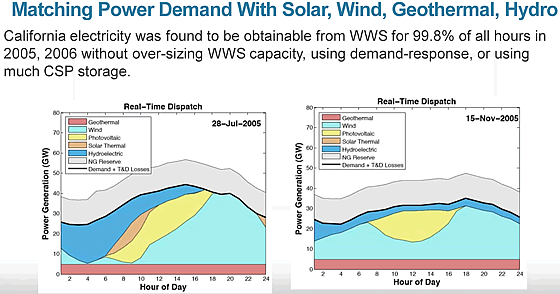
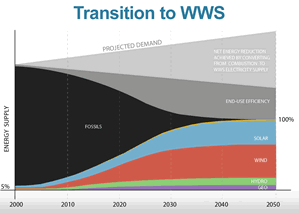
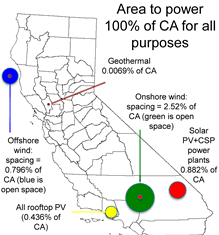 “For California, we’re looking at a slightly different energy mix, it’s more solar than wind, but it’s still 25% onshore wind, 10% offshore wind, 10% rooftop PV systems, 15% government commercial rooftop PV systems, 15% solar PV plants, 15% CSP plants, 5% geothermal, 4% Hydro of which 90% is in place and you don’t need new dams to get the rest actually, they can be on existing dams that don’t generate electricity, or more efficient use of existing dams. Half a percent of tidal and half percent wave. And this is to repower all of California for all purposes, so you can get rid of every nuclear plant, all oil all gas all coal, all in fact biofuels.”
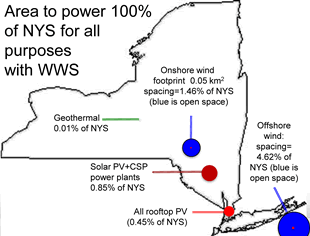 “If we look at New York State, we also did a