‘The portion of the Pegasus pipeline, which ruptured on March 29 resulting in a 5,000-barrel oil spill, will be transported to an independent third-party laboratory for metallurgy testing, the company said in a statement on Sunday.’
‘…Not everyone’s convinced, however, that oil is really on the verge of a new boom. Energy analyst Chris Nelder, for one, has spent a lot of time scrutinizing the claims of the oil triumphalists. Our newfound oil resources, he argues, aren’t nearly as promising as they first appear. And peak oil is still as relevant as ever.’
‘WASHINGTON — President Obama’s pick to lead the Environmental Protection Agency, Gina McCarthy, faced tough questioning from Senate Republicans at her confirmation hearing Thursday, in a clear signal to the White House that they will continue fighting environmental regulations as vigorously as they did in the first term.’
March 20, 2013, Berkeley
Addressing Climate Change, Carbon Cycle 2.0
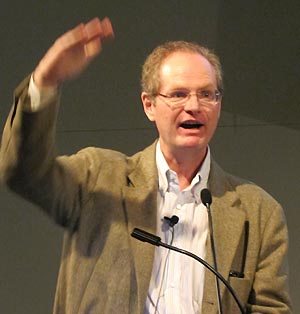
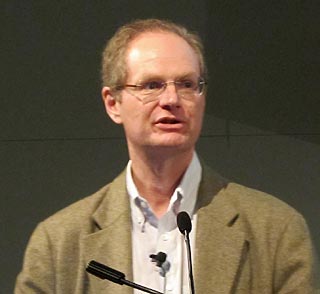
Dr. A. Paul Alivisatos, Director of the Lawrence Berkeley National Laboratory, spoke on climate change at the Lawrence Hall of Science. Notable highlights of his lecture include the carbon cycle, the origins of climate science in the nineteenth century, increasing atmospheric carbon dioxide concentration, the role of CO2’s absorption spectrum in regulating/warming the earth’s temperature, and climate solutions based on lower carbon intensity energy sources, such as natural gas, wind, and solar.
“At each stage when a new discipline of physics developed, it very quickly ended up impacting our thinking about the planet, it informed our understanding about climate. Our understanding today of what is happening with respect to climate change today is actually rooted in the core of physics.” ~ Dr. A. Paul Alivisatos
“The science community has come to an understanding of how human activity – now for the first time in history – really impacts the planet. But it’s also at the same time producing for us the knowledge that we need to avoid the difficult kind of situations that we could get into if we don’t pay attention to those problems.” ~ Dr. A. Paul Alivisatos
‘THE HAGUE — New science teaching standards in the United States will include extensive lessons on human-made climate change. Expected to be unveiled this week, the guidelines will bring the subject to classrooms in up to 40 states, in many cases for the first time.’
‘BrightSource Energy has suspended its application to build a $2.7-billion solar power plant at Hidden Hills, saying it needed to redesign the Inyo County project and the delay would lead to financial uncertainty.’
‘The oceans are expected to become increasingly acidic this century as carbon dioxide gets pumped into the atmosphere and, ultimately, the seas. The acidity is particularly problematic for organisms that must create shells from calcium carbonate, because the shells are more likely to dissolve under acidic conditions.’
‘A study published Monday in the journal Nature Climate Change predicts that global warming will cause bumpier transatlantic flights by the middle of this century.’
‘The first-ever worldwide analysis of climate change’s impact on wine production and conservation, appearing today in the journal Proceedings of the National Academy of Sciences, suggests wine production will shift to new areas as climate change makes the existing ones less hospitable.’