
‘Take a look at these maps: They show the renewable energy potential of every state in the country. The good news is that everywhere has resources to exploit, whether it’s solar in the Southwest, onshore wind in the Midwest, or offshore wind on the East coast.’
News Roundup
1 | Maps Show The Incredible Potential Of Renewable Energy | Co.Exist: World changing ideas and innovation
August 9th, 2012Drought-hit U.S. busts heat record from Dust Bowl days – Yahoo! Weather
August 8th, 2012‘CHICAGO/WASHINGTON (Reuters) – In the throes of a historic drought in the United States, a government agency said on Wednesday that it broke a heat record in July that had stood since the devastating Dust Bowl summer of 1936.’
via Drought-hit U.S. busts heat record from Dust Bowl days – Yahoo! Weather.
US NRC freezes decisons on new reactor, license renewal applications – Electric Power | Platts News Article & Story
August 7th, 2012‘The US Nuclear Regulatory Commission voted unanimously Tuesday not to issue final decisions on granting licenses to build new nuclear power reactors and 20-year license renewals to existing ones, pending resolution of the agency’s waste confidence rule overturned by a court in June.’
NASA Study Links Extreme Summer Heat to Climate Change | PBS NewsHour | Aug. 6, 2012 | PBS
August 7th, 2012‘Scientists will now be looking very closely at this summer’s data to try to better understand the latest drought. But, today, a new paper was published linking extreme heat episodes of recent years, including the Texas and Oklahoma drought of last year, with climate change.’
via NASA Study Links Extreme Summer Heat to Climate Change | PBS NewsHour | Aug. 6, 2012 | PBS.
Richard Muller discusses global warming at Climate One in San Francisco
August 5th, 2012June 21, San Francisco
Richard Muller, professor of physics at the University of California Berkeley and co-founder of the Berkeley Earth Science Temperature project, appeared at Climate One at the Commonwealth club in San Francisco to discuss his recent climate research and thoughts on addressing global warming.
video by Sean Francis Patrick OBrien
Throughout the lively discussion with Greg Dalton of Climate One, Muller challenged many common assumptions about climate change, and made several key points:
1) BEST’s research shows that the earth is the warmest that it has been in the last 300 years.
2) Global warming so far is only .6 degree Celsius, but due to increasing emissions in the developing world future temperatures could reach unprecedented levels.
3) Since China and the developing world’s increasing use of coal is now a major and increasing source of CO2 emissions, strategies to reduce global warming must be applicable there to be meaningful. For example, electric cars are often seen in the West as part of the solution to global warming, but Muller argues that these cars are too expensive to see widespread adoption in China, and in fact electric car CO2 emissions are even worse than gasoline cars there since the electricity they use to charge the batteries is made from burning dirty coal. The reason electric cars cost far more to drive per mile than gas cars is because the lithium ion batteries are expensive and can only be recharged about 500 times, which means they will need to be replaced several times over the lifetime of the car. Muller doesn’t expect car battery technology isn’t likely to improve very quickly.
4) Solutions: China should transition from coal to natural gas, and the United States should freely offer technical expertise to expedite this. Secondarily, conservation and energy efficiency can make a big contribution to reducing emissions.
Selected Excerpts:
17:09
Greg Dalton: The general consensus is – do you agree – that the Earth is warming
Richard Muller: The Earth is warming
Greg Dalton: How big a risk is this to civilization as we know it.
Richard Muller: Now your outside my area of expertise, but I will talk about it anyway, once I say I’m no longer speaking as a scientist now but as a concerned human. I think it’s a big risk, a big danger. Let’s assume for a moment that the IPCC conclusion is right, that most of the warming is caused by humans. If that’s the case, then the increase in carbon dioxide that we project for the future will cause several degrees of global warming which will be unprecedented, it will be warmer. Right now I don’t think it’s the warmest it’s ever been in a thousand years. My own guess is that a thousand years ago it was equally warm. But we will surpass that.
Greg Dalton: But you acknowledge it’s the warmest it’s been in three hundred years
Richard Muller: Oh ya. But it’s an issue is that the end of natural causes, there are lots of fluctuations that take place. Let’s assume for the sake of discussion that it’s caused by humans. In that case, it will keep on going up. I think that’s plausible just from a theoretical point of view. Carbon dioxide is a greenhouse gas. I have no doubts about it being a greenhouse gas. How much it effects the climate depends on some feedback mechanisms about which I do have some doubts. But let’s assume it’s going to go up. If it does go up – the carbon dioxide will go up, unless we do something really drastic. And it’s not we, we can’t do it on our own, we have to get China involved. If China continues to add one new gigawatt of coal every week as they have been doing now for the last decade, if they continue doing that, whatever we do in the United States is irrelevant. The greenhouse gases will go up. And under our assumption we will have several – we will have an unprecedented degree of global warming. We haven’t had it yet. We’ve only had two thirds of one degree Celsius of global warming – that’s according to the IPCC. two thirds of one degree.
Greg Dalton: And is there a delay effect, that is that what we put up there today a) stays up there a very long time and will continue to warm the atmosphere. So it’s like a tanker – it takes a long time to slow or turn a tanker.
Richard Muller: There’s so much misinformation on the subject that it’ll be a whole nother discussion. The carbon dioxide… There are statements from scientists who should know better saying it [carbon dioxide] stays up there for hundreds of years. The fact is if you dump carbon dioxide into the atmosphere half of it disappears in the first year, and the rest will probably get mixed out over the next 20 to 25 years.
Greg Dalton: So you’re saying we could reduce it quickly and sharply
Richard Muller: We could reduce it. But we can’t, not you and me, it has to be China.
Greg Dalton: So most of the future emissions will be in the developing world,
Richard Muller: That’s right
Greg Dalton: Most of the current emissions are red white and blue…
Richard Muller: No
Greg Dalton: Because of the historic emissions Britain and the United States have contributed most of the historic emissions.
Richard Muller: Oh but you’re assuming that those emissions have stayed up there for so long. Ya, let me just accept that for that sake of argument. Let’s say that best estimate is one quarter to one fifth of the warming is due to the United States, so far. Of that, the warming according to the IPCC is .6 degrees Celsius. So let’s say .15 degrees Celsius is due to the U.S. So one sixth of one degree Celsius is due to U.S. Yes, the U.S. has done that. Of the three or four or five … of what Dianne Feinstein said in that clip virtually all of that’s going to come from the developing world. So you can compare that to the fraction of the degree that we have already done and you can say we are to blame, we are guilty for … point one five Celsius.
Greg Dalton: So what to do with developing economies who say look we’re not going to pay for the sins of your grandfathers. We have an equal right to economic development. Why should we pay more than you do did, you grew dirty , why should we pay more to grow clean.
Richard Muller: The fact that we happen to be so much more populous that you means we will put a lot more in. By the way, by 2025, at the current rate of growth, China will be emitting more emissions per person than the U.S.
Greg Dalton: Right now .. in your book you have their measure as a percentage of GDP is much higher but per person the U.S. is still much higher than Europe
Richard Muller: Still higher, but you have to recognize, we are a small country, we can take unilateral action, but it won’t solve the problem.
Greg Dalton: But does that mean we shouldn’t do anything?
Richard Muller: Of course not. But we want to do something that makes a difference, not something that’s meaningless.
What really bothers me is that there’s so many meaningless things out there. People say let’s get all electric automobiles. The U.S. is responsible for .15 degrees Celsius. Of that, U.S. automobiles are responsible for one quarter of that which is .05 degree, .04.
US automobiles have contributed almost nothing to global warming and they will contribute almost nothing in the future. And if we think the thing to do is for us to make electric automobiles. Well, electric automobiles in China produce more carbon dioxide than gasoline automobiles in China, because they’re based on coal.
Greg Dalton: Right, the economist did a story on that recently.
Richard Muller: Ya I was delighted at that.
Greg Dalton: The transportation sector in the United States is accounting for 30 40 percent in the United States. There’s truck there’s a lot of things so…
Richard Muller: You keep on mentioning the United States, the United States is not the problem.
Greg Dalton: Is there a point in leadership?
Richard Muller: We have to show leadership, we have to take actions that will be meaningful in China. Building Tesla automobiles is not a leadership step. They will never be adopted in China. China is a poor country, they cannot afford $100,000 automobiles.
Greg Dalton: Well they got one coming out now that’s 50 that’s sexy and beautiful.
Richard Muller: They can’t afford that either. And it is not sexy and beautiful when you realize.
Greg Dalton: The first time I saw a Maybach $100,000 Mercedes was in Beijing, so there’s a lot of money in China, a lot of our money.
Richard Muller: Well, there are wealthy people in China, that’s true, but this is not addressing the issue of the danger of global warming.
Greg Dalton: So, point taken about scale. Things need to happen at scale. So you believe that switching China from coal to natural gas.
Richard Muller: It’s the only thing. It’s the only thing on the horizon that has any realistic chance of making a big difference is to get them to switch their economy from one new gigawatt of coal every week, fifty gigawatts a year. I mean it makes their solar program miniscule. The actual solar delivered power that they’re adding every year is a tenth of a gigawatt. And they’re adding fifty gigawatts of coal, that’s the big thing. so if you think somehow solar is going to catch up…
—————————-
29:45
Greg Dalton: You said that we need big policy, so what big policy do you think will be needed to actually address the big problems.
Richard Muller: I think the only hope is to kick start the conversion in China and the rest of the developing world – India – into natural gas. They have enormous reserves, they can be exploited, we have enormous know how. I talked at length with one of our great oil and gas experts in the United States, Marlin Downy, and he and I are working together. What we would like to see is to share freely with China – I talked about this in China when I was there just a few weeks ago – freely share our know how on the new gas technologies with China so they can begin the conversion at a rapid rate from coal to natural gas. Whether or not you believe in global warming this is worth doing, because China as you pointed out, is chocking from the soot and the sulfur dioxides and the other pollutions from coal. Just for humanitarian reasons alone they should switch, we should help them switch, to natural gas. But I think this is the most important thing we can do and I think it’s so much larger than anything else I’ve heard suggested that I’m hoping it has some chance of going ahead.
Greg Dalton: And natural gas is quite cheap right now, at least in the United States. It’s much more expensive in Asia and other places. So you’re talking about exporting hydraulic fracturing technology that’s happening along the Marcellus shale Pennsylvania, elsewhere New York, to China so they can get these unconventional deposits of natural gas and get off coal.
Richard Muller: Exactly right
Greg Dalton: And the policy, the market mechanisms that are enabling this are…
Richard Muller: I think we need the President of the United States to talk to our industry and say this is in our national best interest. What we would like you to do is to invite – we will invite – a hundred Chinese engineers, their best oil and gas engineers, to come to the United States to work with you. I want you to hold no secrets back. We have to show them how to do this, and get them… when they go back, they’ll be able to jump start their industry in natural gas. The problem isn’t the patents, we don’t have special patents on this, I’ve discussed this at some length with the experts. The problem is what do you do when you’re drilling and suddenly something doesn’t work. And we have that worked out, we’ve worked it out over the last thirty years.
Greg Dalton: But there’s surely lots of U.S. energy companies who would love to get into that business, they don’t need the President to say that, there’s a market there…
Richard Muller: China won’t allow that. China does not want U.S. companies to come in and own the fields of China. They regard that as a new form of technological colonialism, and I can understand that point of view.
Report by Sean Francis Patrick OBrien
Scientists unlock ocean CO2 secrets key to climate: study – Yahoo! Weather
July 31st, 2012‘SINGAPORE (Reuters) – From giant whirlpools to currents 1,000 km wide, scientists said on Monday they have uncovered how vast amounts of carbon are locked away in the depths of the Southern Ocean, boosting researchers ability to detect the impact of climate change.’
via Scientists unlock ocean CO2 secrets key to climate: study – Yahoo! Weather.
The Conversion of a Climate-Change Skeptic – NYTimes.com
July 30th, 2012‘CALL me a converted skeptic. Three years ago I identified problems in previous climate studies that, in my mind, threw doubt on the very existence of global warming. Last year, following an intensive research effort involving a dozen scientists, I concluded that global warming was real and that the prior estimates of the rate of warming were correct. I’m now going a step further: Humans are almost entirely the cause.’
via The Conversion of a Climate-Change Skeptic – NYTimes.com.
NASA – Satellites See Unprecedented Greenland Ice Sheet Surface Melt
July 28th, 2012‘For several days this month, Greenland’s surface ice cover melted over a larger area than at any time in more than 30 years of satellite observations. Nearly the entire ice cover of Greenland, from its thin, low-lying coastal edges to its two-mile-thick center, experienced some degree of melting at its surface, according to measurements from three independent satellites analyzed by NASA and university scientists.’
via NASA – Satellites See Unprecedented Greenland Ice Sheet Surface Melt.
Also see Huffington Post story
VSPs of Energy – NYTimes.com
July 27th, 2012‘…It should be obvious that Big Oil and Big Coal have a stake in having the public believe that there is no alternative to ever more drilling, digging, and burning.’
Hans-Josef Fell Presents Global Cooling Plan at Intersolar
July 21st, 2012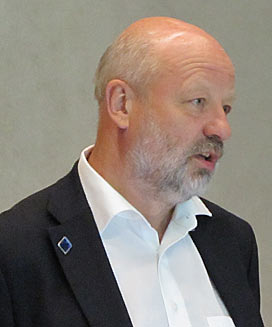 |
| ‘I will not accept two degrees, because when we see the disasters on the world coming from zero point eight degrees today, we should not accept it.’ ~ Hans-Josef Fell |
July 10, San Francisco
Hans-Josef Fell, member of the German Parliament (Green Party) and physicist, spoke at Intersolar in San Francisco about his new book Global Cooling: Strategies for Climate Protection.
He was joined by Stanford’s Mark Jacobson who wrote a forward for the book, and by Eicke Weber, Director of the Fraunhofer Institute for Solar Energy Systems, who gave an enthusiastic though delayed introduction to the talk, highlighting Fell’s role in creating Germany’s feed in tariff.
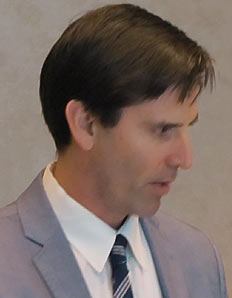 |
| ‘It is a large problem, but it is a solvable problem, and Hans-Josef’s book really tries to address this in a nice way’ ~ Mark Jacobson |
Global Cooling outlines a strategy to reduce carbon dioxide levels in the atmosphere without nuclear power or natural gas, relying instead upon solar, wind, and hydro power. Fell also mentions the need to shift to ‘green chemistry’, since petroleum is a huge factor in conventional plastics, much of which is eventually incinerated and thus released into the atmosphere. He also advocates widespread adoption of feed-in tariffs, which contributed to Germany’s recent extraordinary growth in solar installations.
“We see together that everywhere in the world, big conferences, government conferences, they bring no solutions. We need new strategies, we need new ideas, and I believe new goals – not climate warming till two degrees, this is accepted mostly in the world, and it seems to be not reachable. But I will not accept two degrees, because when we see the disasters on the world coming from zero point eight degrees today, we should not accept it.”
“And I looked to the details, what could we make, the humankind, to protect our climate, and I found out it is possible to cool down the Earth in some decades, and it would be possible in an economic way, not a burden on the economy. And we find the right solutions, the right strategies, and the right friends who would work together, and one of the most important actors.. is the finance industry, the finance people.” ~ Hans-Josef Fell
“There’s an over 30% reduction in the actual energy we need just by converting to electricity and hydrogen because of the efficiency of electricity.” ~ Mark Jacobson
Report by James George