
‘A study by researchers at Stanford suggests that additional cancer-related deaths from radioactive materials released in last year’s accident at the Fukushima Daiichi plant could be as low as 15 cases and as high as 1,300 — a range that highlights the uncertainties associated with any attempts to predict the disaster’s health effects.’
News Roundup
Japan – Estimate of a Cancer Toll – NYTimes.com
July 20th, 2012Dumping iron in the seas could slow global warming, say scientists (+video) – CSMonitor.com
July 19th, 2012‘Dumping iron in the seas can help transfer carbon from the atmosphere and bury it on the ocean floor for centuries, helping to fight climate change, according to a study released on Wednesday.’
via Dumping iron in the seas could slow global warming, say scientists (+video) – CSMonitor.com.
Infographic: Extreme Weather and Climate Change | Union of Concerned Scientists
July 17th, 2012‘Strong scientific evidence links climate change with increasing heat waves, coastal flooding, and other extreme weather events.’
via Infographic: Extreme Weather and Climate Change | Union of Concerned Scientists.
Radiation from Fukushima plant may kill about 130 people: research – latimes.com
July 17th, 2012‘Radiation released into the air by the tsunami-damaged Fukushima Daiichi nuclear power plant most likely will cause the cancer deaths of about 130 residents of Japan, although the toll could possibly go as high as 1,300, Stanford researchers said Tuesday.’
via Radiation from Fukushima plant may kill about 130 people: research – latimes.com.
Japan’s largest anti-nuclear rally in Tokyo draws over 170,000 – The Japan Daily Press
July 16th, 2012Despite the scorching heat on Monday, July 16th, more than 170,000 protesters marched through Tokyo’s Yoyogi Park to demand the government bring an end to Japan’s use of nuclear power. As anti-nuclear protests have been occurring nearly every week since the end of March, this easily marks the largest in the series, as well as one of the largest demonstrations in Japan’s history.’
via Japan’s largest anti-nuclear rally in Tokyo draws over 170,000 – The Japan Daily Press.
Chris Hayes on Twilight of the Elites: America After Meritocracy in SF
July 14th, 2012July 11, 2012 San Francisco
Chris Hayes, editor at large of the Nation and host of MSNBC’s UP w/ Chris Hayes appeared before a packed audience at the Commonwealth Club to talk about his recent book Twilight of the Elites: America After Meritocracy. The talk lasted about an hour and was followed by a book signing.
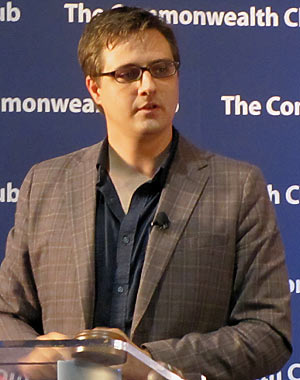 |
| ‘It is trickier than it looks to produce a system with huge rewards for performance that is not also a system with huge rewards for cheating.’ ~ Chris Hayes |
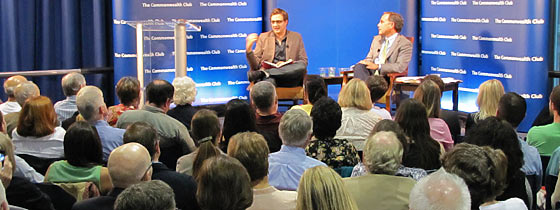
Report by James George
A State-by-State Climate Map – NYTimes.com
July 14th, 2012‘A new interactive map released by the group Climate Central summarizes the average temperatures of each of the 48 contiguous United States for the last 100 years. By clicking across the country (try it on the map above), you can see that lately, temperatures have been trending up no matter where you live.’
‘Shut Down San Onofre’: The New Front Line in the Fight Against Nuclear Power | The Nation
July 8th, 2012‘…If an earthquake cuts the power that runs the cooling system that keeps the nuclear core from overheating, San Onofre has diesel backup generators that are supposed to take over. But in May a study found that the backup generators could inadvertently shut down in an earthquake, causing a nuclear meltdown—exactly what happened in Fukushima.’
via ‘Shut Down San Onofre’: The New Front Line in the Fight Against Nuclear Power | The Nation.
BBC News – California high-speed rail wins approval
July 7th, 2012‘California lawmakers have approved financing for a bullet train that would eventually become part of the first dedicated high-speed line in the US.’
Japanese Commission Calls Fukushima Nuclear Crisis a ‘Man-Made’ Disaster – NYTimes.com
July 5th, 2012‘TOKYO — The nuclear accident at Fukushima was a preventable disaster rooted in government-industry collusion and the worst conformist conventions of Japanese culture, a parliamentary inquiry concluded on Thursday.’
via Japanese Commission Calls Fukushima Nuclear Crisis a ‘Man-Made’ Disaster – NYTimes.com.