Field
Reports

News Roundup

COP21: Simone Lovera, Global Forest Coalition, Speaks on Paris Agreement Draft

December 11th, 2015

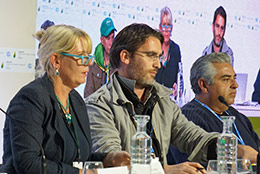
Simone Lovera of the Global Forest Coalition appeared as a panelist inside COP21 to comment on a draft of the Paris Agreement.
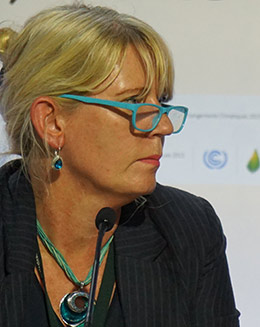
SimoneLoveraPanel04555_260Other panelists were Eberto Diaz, La Via Campesina, Jose Bravo, Grassroots Global Justice Alliance,  and Maxime Combes ATTAC France. The intensity and implications of these arguments sheds some light as to why the delegates will spend so much time struggling over whether or not to include what might appear to be a simple phrase in the text.

“We’ve seen the latest text and we are very concerned that there are still references to a so called net approach in that text, which basically means that forests and land use in general, including agriculture, could be used as compensation for fossil fuel emissions, you know, the net zero approach, in which means that you can continue to emit as long as you compensate it by planting a bunch of trees.”

Simone Lovera

“through accounting mechanisms that are used at the moment, bioenergy is classified as carbon neutral, while in reality it causes massive emissions. It also causes massive deforestation and forest degradation all over the world, and a general degradation of ecosystems” ~ Simone Lovera

“We actually think that this is one of the biggest and most dangerous of all these false solutions. And we’ve actually already see it with bioenergy all over the world. People are calling here for 100% renewables, but it’s over forgotten that in continents like Europe, 60-70% of this renewable energy is in reality bioenergy. And bioenergy is not renewable. It’s not that if you burn a tree, that immediately the next day, boop, there is a new tree. There a tremendous time lapse between burning trees and burning other biomass and the time that that biomass has actually grown back. And that is in the best case, that such a tree actually grows back, it could take up to 150 years.”

“We do not have 150 years for climate change solutions, we do not even have 10 years for climate change solutions, we need solutions right now. “

“That is why, bioenergy is not carbon neutral at all. And it’s one of those many many myths that has been spinned around in this conference. You know, that through accounting mechanisms that are used at the moment, bioenergy is classified as carbon neutral, while in reality it causes massive emissions. It also causes massive deforestation and forest degradation all over the world, and a general degradation of ecosystems – as has been noted already by many decision makers for example in the convention on biodiversity.”

“Besides that there’s this whole idea that planting trees would be a solution, but trees, sadly, in these days of climate change, are a very unreliable carbon sink. We’ve already seen all over the world massive forest fires. People that now live between monoculture tree plantations are basically living in a between a time bomb. Because more than anything, monoculture tree plantations are very susceptible to fires. And sadly, instead of restoring lands, we see more and more that governments are promoting monoculture tree plantations.”

“In countries like Brazil, China, India, EU and the US., we see that as compensations for emissions, massive monoculture tree plantations are being planted. For example, lands that are classified as degraded and marginal, but that are really pastoralist lands, the lands of indigenous peoples, the lands of marginal peoples.”

SimoneLoveraPanel04556_260

“Climate mitigation and resilience is a co-benefit of land use policies that should first and foremost focus on people’s right to food and people’s right to land.” ~ Simone Lovera

“And now there an even more dangerous option on the table, which is bioenergy with carbon capture and sequestration. This has been baptized by one of our colleagues as the phantom of the COP opera.”

“Because it doesn’t exist, its scientifically simply not viable. But at the same time, massive subsidies are being pushed into these false solutions, you know as sort of the last angle, to ensure that business as usual can continue while countries pretend, just pretend to mitigate emissions.”

“And the main victims of this are those people that have weaker land rights, like women. You know, these kind of manipulations around land use, these policies that use land as a resource in which you can just use to mitigate climate change, mainly impacts indigenous peoples, women, and other groups in society that have weak tenure rights, and are just very often kicked off their lands to make a place for these monoculture tree plantations.”

“We see the same thing in agriculture now, where they are trying to promote climate smart agriculture, which is a very corporate dominant model of big financiers trying to make a very profitable business out of carbon offset sinks…”

“We think that the whole narrow approach of carbon accounting will always lead to a marginalization of the human rights aspect, of the social aspect, of the land use aspect, of the biodiversity aspect, of ecosystems. And that’s why we do not want land to be included in accounting framework.”

“Sure, we absolutely absolutely need sustainable land use, we need sustainable agriculture, we need sustainable livestock production. If we really want solutions also to climate change, we need to address the over consumption of unsustainably produced meat and dairy. But we cannot do that through a carbon accounting framework, because we are also talking about people’s foods, we’re talking about people’s lands, we’re talking about people’s rights. So that’s why you need a holistic approach.”

“Climate mitigation and resilience is a co-benefit of land use policies that should first and foremost focus on people’s right to food and people’s right to land.”

Report by James George

COP21: Tom Goldtooth – International Rights Of Nature Tribunal

December 11th, 2015

Dec 9, 2015 COP21, Paris

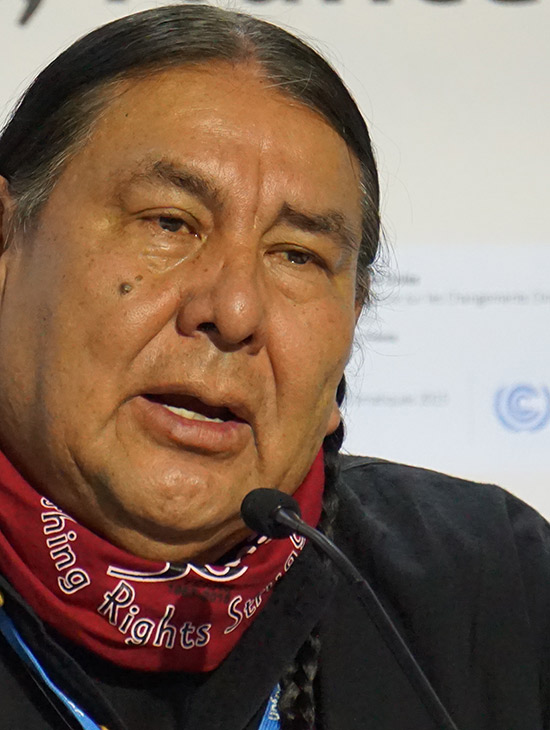
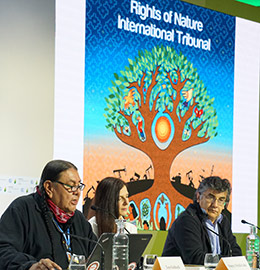
Tom Goldtooth, of the Indigenous Environmental Network appeared as part of a panel discussion with Pablo Salon and Osprey Orielle Lake, Executive Director of WECAN on the International Rights Of Nature Tribunal.

TomGoldtooth03685_550

“The tribunal found that mother earth is a source of life which needs to be protected, and not a resource to be exploited and commodified as natural capital” ~ Tom Goldtooth

Transcription

“I’m glad to be here, and I was the tribunal judge for the topic of financialization of nature.”

“The tribunal members as far as, civil society, indigenous peoples, members of La Via Campesina, peasants and small farmers, especially people of the Global South, we’re very concerned of the escalation of the market system. Not only within the negotiations here of this COP 21. but outside of the COP, with movements such as the biodiversity offset movement here in Europe, conservation offsets. And it was all bundled up with the concern about is this part of a movement of objectification by capitalism, by corporations, and with support of the financial institutions, like development banks, regional development banks, the World Bank, Chase Manhattan, as well as investment from extractive energy, including governments like Norway.”

“And as we looked at this issue and brought this case before this tribunal in Paris, we found moving evidence by experts and witnesses that this critical topic of financialization of nature is rapidly become the vocabulary of nature conservation debate. In fact it’s the main mechanism that has been incorporated within the Paris Agreement. Within the Paris Agreement you’ve got the article section that emphasizes in cloaked terminology a market mechanism being presented as a mechanism for sustainable development.”

TomGoldtoothPanel03666_260

“That brings up a lot of concerns of course, in addition to the rights of mother earth, the rights of nature, is the tremendous risk on violation of human rights, including the rights of indigenous peoples. As we looked and explored this, market mechanisms, we had to look at various free market economies, carbon trading, carbon offsets, clean development mechanisms, and other market mechanisms that allow the polluter to profit while the impacts of climate change and the world still has disproportionate impact to ethnic communities, indigenous communities, in the North, people of color, low income, where polluting companies in the North like Chevron continue to expand their release of toxic emissions contribution to greenhouse gas concentrations while they buy and rent trees in the Global South.”

“The tribunal found evidence that the financialization of nature process separates and quantifies the earth cycles and functions such as carbon, water, forest, fauna and biodiversity, turning them into units to be sold in financial and speculative markets. This includes the mechanism of reducing emissions from deforestation and forest degradation known as REDD, including payment for environmental services all bundled up as as a form of objectification of the sacredness of mother earth. With many indigenous people that have testified, this is also a violation of the traditional indigenous cosmo-vision.”

“So that conclusion was yes, this financialization of nature is part of a green economy regime that puts a monetary price on nature, on mother earth, as part of a derivative market that would only increase the destruction of mother earth. The tribunal found that mother earth is a source of life which needs to be protected, and not a resource to be exploited and commodified as natural capital.”

“So the tribunal found that they will keep this case open and continue to hear cases of where these market mechanisms continue to violate the universal declaration on the rights of mother earth. Its a very serious issue when it’s the main mitigation solution that’s emerging out of this COP 21. Thank you very much”

Q & A

“The biggest challenge to the dominant society, the biggest challenge to the populations of an industrialized society is that they have been removed from nature. Whatever that history is here in Europe, people from Europe migrated and occupied our territories in United States. They didn’t understand what their own relationship was with the mother earth. Some of the small farmers did, but not the collectivity of the settlers who came.”

“So indigenous people, we have that relationship to that sacredness, but we have a situation of colonization, that separates our life, uses our natural environment, trees for an example, as part of a resource, not for us, not for us, whether it’s water, but a resource to feed the world. So the world’s out of balance. As we fight for our own survival – because this climate issue is a life and death issue. So we are trying to address our own issues for survival, and yes, sometimes we get challenged with trying to find a balance on what that direction is. And with the temptations of big money, I’m talking millions of dollars, from the World Bank, and other NGOs, and foundations and countries like Norway, throwing millions of dollars down to support a false solution like carbon market system, tears at the fabric of our peoples. That’s the danger. And I’ve seen that fragmentation. But we’re going to work it out ourselves, we’re going to work it out ourselves. Thank you.”

Also see Tom Goldtooth’s earlier post briefing statements

Report by James George

The White House’s COP 21 goals: less climate idealism, more political realism | Nigel Purvis | Opinion | The Guardian

December 10th, 2015

‘The United States’ refusal to make internationally binding its ambitious pollution targets at the Cop21 climate talks in Paris isn’t a sign of Barack Obama’s lack of political will, but a reflection of the legal limits of his authorities and the political realities of what other nations will commit to doing.’

Source: The White House’s COP 21 goals: less climate idealism, more political realism | Nigel Purvis | Opinion | The Guardian

John Kerry Says He Would Explain Solution to Climate Change as a Market Issue – NYTimes.com

December 10th, 2015

Another example of the persistent democratic narrative of framing responses to the pending climate disaster as business opportunities:

‘Mr. Kerry said the market for renewable energy sources and other types of clean energy would “explode” if the right deal was struck in Paris. Repeating a theme he has used recently, he said the energy transformation would be “business-driven,” combined with “consumer demand and voter demand.”’
Source: John Kerry Says He Would Explain Solution to Climate Change as a Market Issue – NYTimes.com

A New Draft Agreement for Paris Climate Negotiators – The New York Times

December 10th, 2015

‘A new version was released of the international agreement that negotiators at the Paris climate conference have been haggling over for more than a week.’

Source: A New Draft Agreement for Paris Climate Negotiators – The New York Times

COP21: Secretary of State John Kerry Pledges to Double Grant Aid by 2020

December 9th, 2015

Dec 9, 2015, COP21 Paris

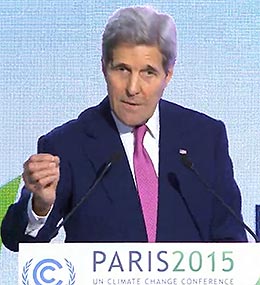
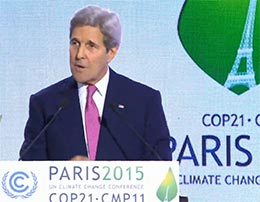
At a COP21 press conference Secretary of State John Kerry just announced that the United States would double grant based commitments by 2020.

John Kerry

‘The United States is committing to double our grant based commitments by 2020.’ ~ Secretary of State John Kerry

John Kerry

“Here in Paris we have the rarest of opportunities – to save the world” ~ John Kerry

Report by James George

COP21: Former Vice President Al Gore Fires Up Delegates – Receives Standing Ovation

December 8th, 2015

Dec. 8, 2015, COP21, Paris

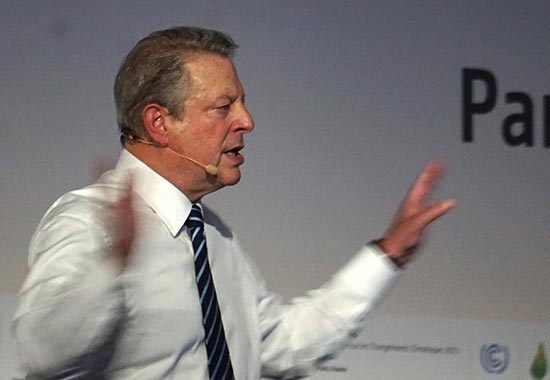
Former Vice President Al Gore brought COP21 delegates and others to their feet in standing ovation with the impassioned close to his address. Gore’s presentation featured slides and video of recent climate related extreme weather events and distressing situations from all across the world, such as the flooding in Chennai, India. There talk featured inspirational images as well, such as the well known picture of the earth from space and mass demonstrations for climate change action.

Excerpt

“The best chance to address this climate crisis is here, now. We have a few days left. Whatever delegation you are following or are a part of use these next 72 hours to double down on your commitment to do the right thing. There are people who have been to previous conferences, and they look back on the long string of them and they’re tempted to conclude, it’s not going to make any difference.”

Former U.S. Vice President Al Gore

“I want them [future generations] to look back at us here in this place, in this hour, on this day, and ask, how did you find the moral courage to break through the impasses, to rise above the differences, to see beyond the difficulties, across them to the bright future that was possible, and see the larger moral question that was at stake.” ~ Al Gore

“There was a poet in the United States in the last century named Wallace Stevens who wrote the following line: after the last no comes a yes, and on that yes the future world depends.”

“Every great moral cause that humanity has been faced with was met with a series of ‘no’s and fierce resistance: the abolition movement, the struggle for woman’s suffrage and gender equity which is ongoing, the struggle for civil rights, the struggle against apartheid, the struggle for the end of discrimination on the basis of sexual orientation. All of these moral causes have met ‘no’s and fierce opposition, but they all eventually came down to a single choice, between one of two options, what is right and what is wrong.”

“In this case, what is right is to save the future of our planet and to say to future generations that we’ve done the right thing here. Make no mistake, the next generation will inherit the earth we bequeath to them, and depending on their circumstances they will ask one of two questions.”

“If they live in a world in which we have not addressed this crisis, in which we have not taken advantage of the opportunities to create jobs with renewables and sustainable agriculture and fishing and forestry and more efficiency. If they suffer even worse floods and mudslides and droughts and the spreading of diseases into regions where they were unknown previously, the melting of the ice, and the sea level rise and the flows of millions of climate refugees. If they live in such a world, they would be justified in looking back at us, this group of us gathered here in Paris in December of 2015 and asking, ‘What were you thinking? Why did you not act?’”

“But if they live in a world where there is a renewal of hope, where there are millions of jobs being created, where the carbon concentrations and greenhouse gas concentrations are declining, and where people are living and flourishing, communities with renewable systems and sustainable economies. And if they look at their own children and feel secure in saying to them, you’re world is going to be even better.”

“I want them to look back at us here in this place, in this hour, on this day, and ask - how did you find the moral courage to break through the impasses, to rise above the differences, to see beyond the difficulties, across them to the bright future that was possible, and see the larger moral question that was at stake.”

“How did you do it? And part of the answer will be that the men and women who came here to Paris from 195 countries all around the world, came together in support of a higher purpose – to protect our home, to protect our planet earth. We will say to them in answer, we found out that political will was itself a renewable resource.”

“Thank you very much, Merci Beaucoup.”

Report by James George

UN Secretary General Ban Ki-moon

December 8th, 2015

Dec. 7, 2015, Paris

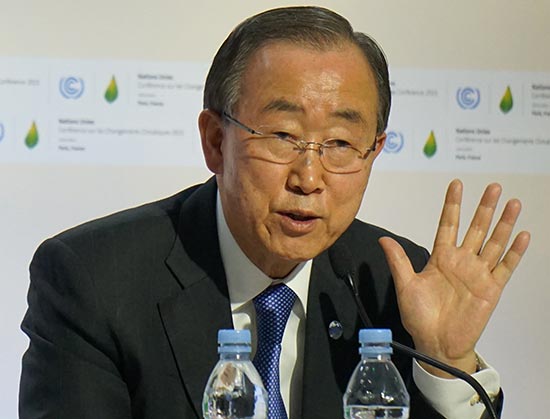
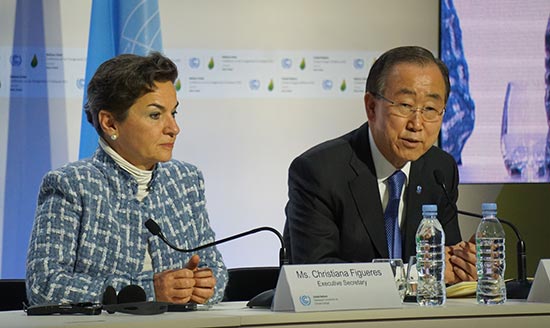
UN Secretary General Ban Ki-moon spoke at a press conference inside COP21 in Paris. Here’s a few excerpts where he speaks about the INDCs (Intended Nationally Determined Contributions) and the need to reach an agreement by the end of the conference Friday.

“The national climate plans are a welcome start but they fall short of our goal to limit global temperature rise to less than 2 degrees Celsius. We much go much farther and much faster. That is why we need action now here in Paris. We cannot afford half measures or delay. We have less than just four days of negotiations left. Some tough issue still remain.”

UN_BanKi-moon02475

“A political momentum like this may not come again. I urge ministers and negotiators gathered here not to squander it. I’m confident that Paris can be a turning point, a decisive turning point in our history to a cleaner healthier more sustainable and prosperous future.” ~ United Nations Secretary General Ban Ki-moon

UN_BanKi-Moon02378

Report by James George

Demonstration for 1.5 C temperature limit

December 8th, 2015

Dec. 7, 2015 Paris

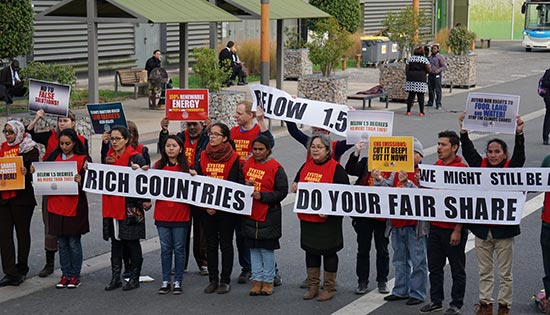
While demonstrations at COP21 have been largely subdued after the mass rally was cancelled due to terror concerns, a few actions pop up here and there.  Here demonstrators call for a 1.5 C warming limit and for rich countries to  contribute more.

FairShare2625

COP21: California Governor Brown in Panel Discussion

December 8th, 2015

Dec 7, 2015, COP21, Paris

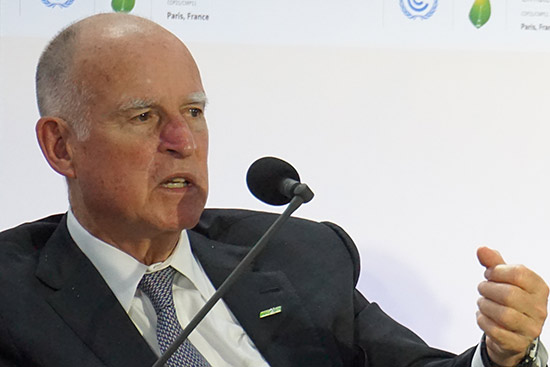
California Governor Brown participated in a panel discussion in Paris led by Greg Dalton of ClimateOne and  also including co-panelist Oakland Mayor Libby Schaaf - both part the large California contingent inside COP21 during the talks. Brown spoke in favor or green development and a carbon tax as important steps to avoid the far greater expense of a climate calamity.

JerryBrown02704_550

“We gotta do something about climate change or that’ll be trillions in costs to the world. So it’s cheaper, whatever the cost benefit says. If we go past a tipping point and things really get screwed up, it is going to be expensive. So whatever we’re doing to prevent that calamity is a cost effective move, cause you’re not comparing it with doing nothing, you’re comparing it with do nothing and disaster happens and that’s expensive, versus investing in solar, in electric vehicles, in energy efficient buildings, a carbon tax and all the rest. And even the carbon tax, what it does is, it burdens carbon intensive industries, and that’s what you want…” ~ Governor Brown

Report by James George