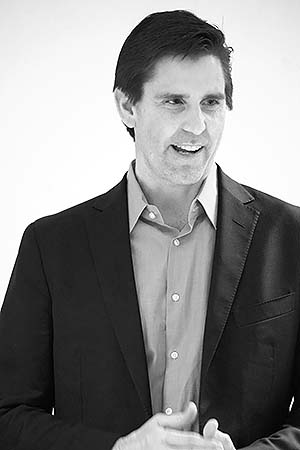
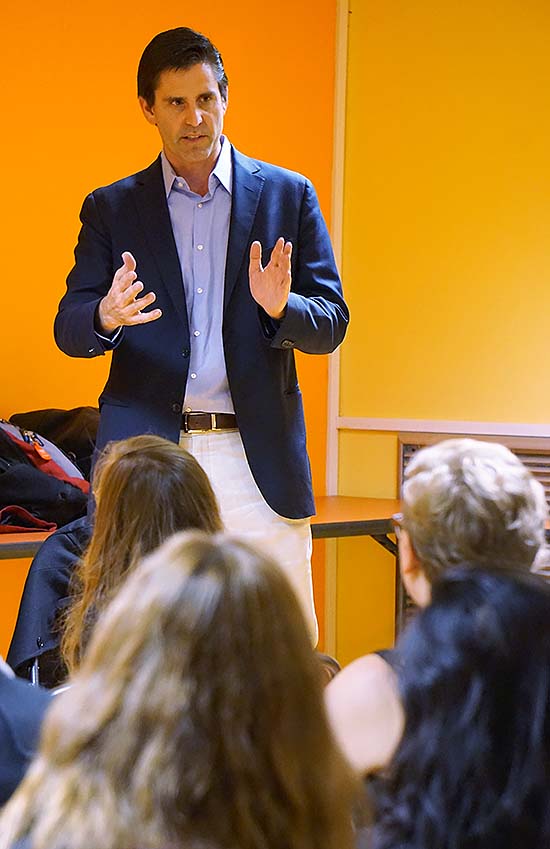
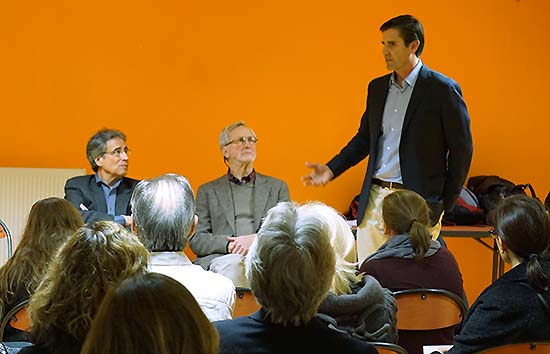
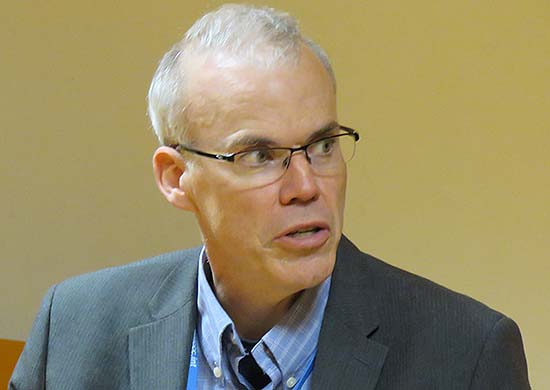
Bill McKibben of 350.org appeared along with Mark Jacobson, James Balog, Neil Leary, Jacob Scherr, and John Adams at a youth climate activist event called Climate Action – Engaging the Next Generation.
Partial Transcript
“You know, we planned last weekend to have an enormous march in Paris. We though it would be as big as the one in New York last September, and my colleagues all of them young had worked for six or eight months had moved over here to France, we had people from hundreds of different groups, everybody lined up but of course that went by the board.â€
“The beautiful thing that happened immediately was that we sent out word all around the planet saying, look, we can’t march in Paris, we need people marching everywhere else. There were 2200 marches and things around the world last weekend and they were astonishing to see..â€
“… they were amazing, big marches, thousands of people in just the most unlikely places, in Malawi, in Ghana, and huge turnout down under… Across Europe of course, but also happily very big in Asia, in many places that we’ve really been working hard, all of us, all the different groups to kind of establish a foothold - places like Nepal, places like India.”
“In fact there was a very moving picture of people in Chennai demonstrating, and in the six days since, Chennai has had the biggest rainfall ever measured in that part of the world. There’s now hundreds of dead people there, the city’s been cut off. A city of eight million basically cut off, an island.â€
“The point I’m trying to make is that now there’s the big movement out there, and what it’s been engaged by are a series of fights. That’s how people have become… – the trouble with climate change always is it seems so big and we seem so small against it. What could we do, what could matter, what could happen?â€
“And the trick of building this movement over the last five or six years has been to convince people that there’s enough of us that when we concentrate our power on particular things, we can make a difference.â€
“So in the states, you know, the key fight, oddly, has been this fight over this pipelines down out of the tar sands of Canada that somehow turned into an emblematic battle that rallied people as things hadn’t before. And as a result, you know, pleasantly for the moment, we’ve beaten that pipeline. More to the point, as the leader of the American Natural Gas Association said to his colleagues in a speech a few weeks ago, he said, we somehow have to stop the keystonization of projects…”
“Everyplace people are, people are fighting – there’s people are going to jail today in Boston fighting pipelines there. In place after place, all over the world. We think we’ve beaten plans for the biggest coal mine in the world in Australia. France here has banned fracking, which is I think in many way a direct outgrowth of the work that [?] and so many others did in New York State to take this issue and make it absolutely central.â€
Mark Jacobson, professor at Stanford in California, appeared alongside several other panelists including Bill McKibben at an event called ‘Climate Action – Engaging the Next Generation.’
Jacobson explained several aspects of his 100% renewable energy plan in record time, underlining a few key points along the way, such as the stability of the grid with load offsetting, and the dynamics of black carbon and other pollutants on global warming and health.
Partial Transcription (rushed, not perfect)
“We’ve been developing energy plans to transition states and countries to 100% clean renewable energy. By clean and renewable that’s wind and water and solar power. It does not mean biofuels, it does not mean nuclear power, it does not mean natural gas, nor coal with carbon capture. It’s simply clean and renewable energy, because we’re trying to address air pollution and climate and energy security simultaneously, and the only way you can do all of these together is by eliminating sources of combustion altogether and electrifying everything. So this is the idea is to electrify the world to all purposes. So all purposes means electricity, transportation, heating and cooling, industry, agriculture, forestry, fishing.”
Mark Jacobson
“And so we developed plans not only for the 50 United States now, but just recently for 139 countries of the world …those were built starting last week. I’ll tell you a little bit about them. The other thing that was released, we also realized the grid has to be stable, if you have intermittent wind and solar in a large portion of it.”
“But it turns out that when you actually electrify everything it actually makes it easier to stabilize the grid because you have more what are called flexible loads. Like transportation, you don’t have to wire a wind turbine to your car to drive it around, because it has batteries inside. So you can actually provide the power to your car at different times of the day so you can control when the car gets powered, and the utility can give incentives for people to charge for example at night. This is called a flexible load as opposed to an inflexible load. Like when you turn the lights on you need the electricity right away.”
“But there are a lot of loads, across the grid, especially heating and cooling, transportation, and in industry as well, where you can control when people get there power. It turns out it makes it a lot easier to match power demand. So we just did a study after doing the fifty state plans where we looked at transitioning each of the 50 states to 100% wind water and solar. We did a grid integration study – could we keep the grid stable with those 100% plans. We found is ya, without any loss of load, over six years period every 30 seconds we found over the entire United States, we could keep the entire grid stable.”
“So, that’s the number one criticism that people who have been against wind and solar and intermittent energy sources have said that you just can’t keep the lights on, it’s going to be way expensive, you need all this peaking power, you need gas for providing peaking. But it turns out you don’t, you do not need natural gas at all for peaking power, let alone base load power. It’s because you other types of low cost storage.”
“You don’t even need batteries it turns out for stationary storage. You need ’em in cars, electric cars, but not for stationary storage. So the types of storage we looked at that were low cost, whether it’s heat, for heating, there’s like in water and soil and rocks, and basically in ice too for cooling. For electricity, these types of storage are existing, not growing, but existing hydroelectric power, pumped hydroelectric power, existing plus proposed, pumped hydroelectric power, and concentrated solar power with phase change material.”
“It turned out we were able to stabilize the grid with just those types of storage without any stationary batteries.”
Examples:
Drake Landing – seasonal heat storage. 52 homes, with solar rooftop system, glycol solution, pass the heat into water, move through bore holes  to30 meters under ground, rocks heated to 80C, and stored for winter.
Stanford University. Gas heating plant bulldozed, replaced with 2 boilers and a chillers heat exchange system, and an elaborate pipe system.
“So we’ve developed these plans for 139 countries and the fifty states to go to 100% renewable energy. If I were to list, well why would we want to do this? Aside from eliminating global warming… and by the way this would be a transition of 80% conversion by 2030 and 100% by 2050.”
“My main work is computer modeling, I build climate models, to simulate climate, air pollution, and weather, and you know probably the biggest thing I ever found was that black carbon was the second leading cause of global warming after carbon dioxide. So I look a lot at the effects of particles on climate. And one way to actually address global warming and climate change is to control selective pollutants, like black carbon, because it has, it’s like a million times more powerful per unit mass than carbon dioxide, but there’s a lot less of it in the atmosphere, and there’s a much shorter lifetime, only a few weeks. But it is the second leading cause, like carbon dioxide causes about 42% of global warming and black carbon is about 20%, and methane is about 15-16%, and then there’s nitrous oxide and oxone and clorofluorocarbons…”
“Because black carbon is a particle, and particles kill worldwide from air pollution, kill 4 to7 million people worldwide, each year, including about 60-65,000 in the United States at a cost to the US of about 3% of the GDP for the mortalities and morbidities. So this is, on a worldwide scale it’s estimated that, well today it’s on the order of 15-25 trillion dollars per year in health costs from the 4 to 7 million people plus the millions more that are killed to do air pollution, and that’s going to be equivalent in 2050, the climate impacts will also be around 20 trillion dollars per year. So there’s 50 trillion dollars per year in health plus climate costs. But we’d eliminate those costs.”
“My point about the black carbon was, the only way you can actually save the arctic ice is by eliminating black carbon emissions. Because if we stop the CO2 today, which we have to do, to stop catastrophic warming, it’s still not going to save the ice. But black carbon, because of it’s short lifetime and its strong impacts on climate, you can, and you also reduce health problems simultaneously, so there’s a double benefit. So you can do that kind of accounting, but the key is you have to eliminate all combustion so that means eliminating all sources of not only black carbon and carbon dioxide, but there are also cooling particles, air pollution particles that mask half of global warming that’s occuring.”
“So even though greenhouse gases plus black carbon causes this much warming, the net observed warming is this, and the difference is air pollution particles that cause cooling, such as sulfates and nitrates that mask or offset half of global warming. And so if you actually just cleaned up air pollution particles you’d actually see a rise in the observed warming which is quite scary. So you want to clean up the particles because the cause 90% of the health problems due to air pollution, but doing that will double global warming actually, immediately. And this is a scary problem. So the only solution is to eliminate all the particles and greenhouse gasses simultaneously and that’s what we’re planning on trying to do…”
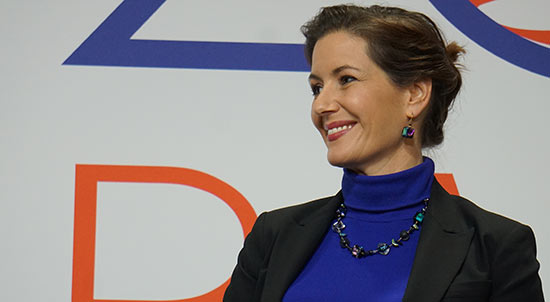
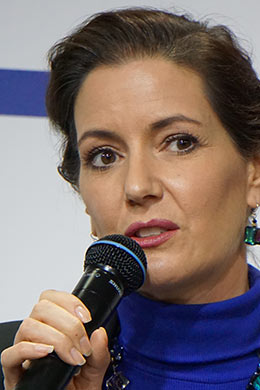
Mayor Libby Schaaf of Oakland California spoke at COP21 alongside other panelists including green philanthropist Tom Steyer, Diane Holdorf, Kellogg’s chief sustainability officer, and Gary Demasi, Data Center Energy & Location Strategy at Google.
As has become the custom among politicians,  climate change actions we’re primarily framed as wise economic choices, “Climate action can save you money†she said.
There were also progressive messages in her statement, as she highlighted a partnership with Rising Sun which engages in job training for low income people and for those returning from prison. She also mentioned Oakland’s ‘social justice’ and ‘equity goals’ and issues of consumptive emissions.
“And as far as partnerships go, we are very focused in Oakland on marrying our climate change goals with our social justice and equity goals.†~ Libby Schaaf
Selected Excerpts:
“Cities are producing 70% of the energy related carbon emissions in the planet so we clearly are playing an important role if we are going to make tangible changes.â€
“I’m proud to say that Oakland just in the last 10 years has reduced our core emissions by 10%, and more importantly, our consumption emissions by 15%. We also think its important that both governments and companies not just measure the emissions that come from that actual location, but also think about the emissions that are caused from any part of the planet when you are consuming goods within your boundaries.â€
“And as far as partnerships go, we are very focused in Oakland on marrying our climate change goals with our social justice and equity goals. And that’s where partnerships have truly been powerful for us.â€
“We have entered into several partnerships including with the California Youth Employment Partnership as well as a great organization called Rising Sun to do job training. And to do job training in low income communities of color, so that we can actually educate people in communities that don’t always find out about energy efficiency improvements, and these can be citizens that go out in the communities that they grew up in and help home owners, apartment dwellers reap the benefits of energy efficiency which not only can help save them money on their monthly energy bills, but also help save the planet as well, as well as provide great jobs for a growing sector. And finally Rising Sun specifically works on our community members who are returning from prison to give them a great skill and a great entry back into our society.â€
‘Negotiators from 195 nations on Saturday finalised a blueprint for a pact to stave off some of the most dramatic consequences of climate change at the COP21 summit in Paris.’
Iconic Climatologist James Hansen appeared at a COP21 press conference, where he issued a strong critique of the anticipated Paris agreement as ‘half-assed’ and ‘half baked’ for once again relying upon voluntary emission reductions. Hansen argued instead for a gradually rising cap and dividend approach to controlling carbon emissions.
“Science tells us we have to actually reduce emissions rapidly. And furthermore, the economic studies show that if you put an honest price on carbon emissions, you would reduce emissions rapidly. But if you don’t have that price on there, you’re not going to reduce the emissions. You will reduce the emissions someplace, but then it keeps the price low so somebody else will burn it.†~ James Hansen
“The problem is, fossil fuels appear to the consumer to be the cheapest energy. They’re not really cheapest, because they don’t include their full cost to society… and the climate effects, which are beginning to be significant and will be much larger in the future are also not included in the price of the fossil fuels.” ~ James Hansen
Hansen swamped by reporters with further questions for nearly an hour after the press conference.
The ‘feel good about themselves’ assumption below seems rather condescending and likely inaccurate. One panelist here in Paris made the point that divestment challenges the legitimacy and morality of fossil fuel extraction – in other words it is not just an economic strategy.
‘Before we get into the numbers, a little background. The idea behind the divestment movement is that fossil fuels are doing terrible things to the environment and that if investors withdraw capital from companies that extract and sell fossil fuels it will hinder their growth and maybe even shut them down. It’s a specious argument, but railing against oil companies makes the global warming agonistes feel good about themselves, so they carry on.’
BERLIN — If negotiators in Paris reach an agreement next week on a global plan to rein in the use of fossil fuels, the next question becomes this: How can the participating countries fulfill their pledges to do their part?
Gov. Jerry Brown was deep into a two-hour meeting on climate change with some of California’s top scientists when he interjected a highly technical and much more personal question.
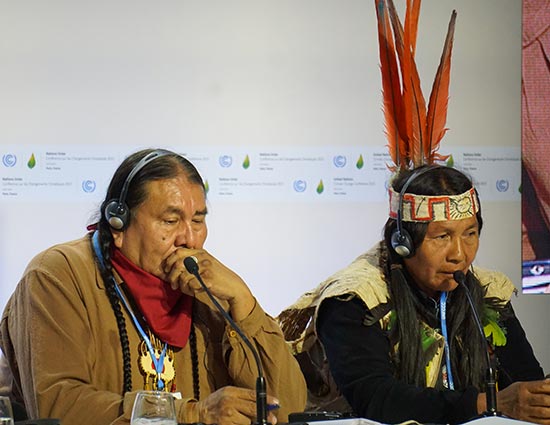
Tom Goldtooth of the Indigenous Environmental Network  appeared at a press conference inside COP21 with Gloria Ushigua, Alberto Saldamondo, and Berenice Sanchez. In the following video he is shown  answering further questions  by reporters in the hall afterwards.
Tom Goldtooth’s comments from the press briefing:
“One of the concerns that indigenous people in our network are worried about is the further implementation of what is called REDD, Reducing Emissions from Deforestation and Forest Degradation. It is one of the carbon market regimes that is within the Paris Accord Document.”
“And we have a concern that this is an instrument that will further cause the land grabs and human rights violation of our indigenous peoples. But most concerning to us is the issue around the violation of our traditional cosmo-vision, so were going to talk about how REDD and other carbon market regimes violate that traditional beliefs that we as indigenous peoples have, the sacredness. ”
“How can you sell the air? How can you sell our trees in a climate capitalism system? That’s what were going to talk about.â€
“Whenever you hear indigenous people speak, no matter where we come from, you hear us talk from our heart. You hear us talk about our relationship to the sacredness of the female principle of Mother Earth. We talk about the sacredness of all of nature, of life, that is our foundation.â€
“So that’s why we are very critical in our analysis of any solutions that are coming from the hallways of the United Nation Framework Convention on Climate Change. Like I said in this film and for this panel, this part of the information has not been provided here, as far as how it violates the sacredness of who we are, and what we have to compromise to participate in these foreign regimes of market systems. How do we reconcile those traditional beliefs, and how it tears at the fabric our communities, ripping us apart, causing us to fight against each other over money.â€
Comments outside in the hall
“These forested areas are now used for carbon credits that allow polluters in the North to continue to pollute.”
“There is no way to make the REDD project better, it cannot be fixed. It is not a solution. It involves a climate market regime that has been part of a big capitalist market system that has never protected front line communities, indigenous peoples, fisher peoples, andnd that’s why we have to look for other alternatives to product the trees but not in these market systems that just allowed more dumping of pollution in the North.†~ Tom Goldtooth

 “… they were amazing, big marches, thousands of people in just the most unlikely places, in Malawi, in Ghana, and huge turnout down under… Across Europe of course, but also happily very big in Asia, in many places that we’ve really been working hard, all of us, all the different groups to kind of establish a foothold - places like Nepal, places like India.”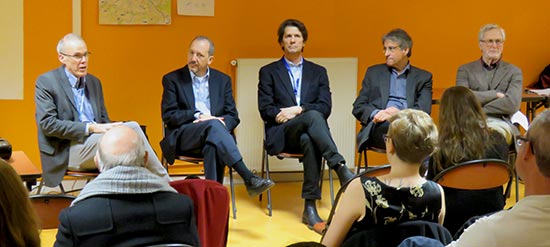
 over this pipelines down out of the tar sands of Canada that somehow turned into an emblematic battle that rallied people as things hadn’t before. And as a result, you know, pleasantly for the moment, we’ve beaten that pipeline. More to the point, as the leader of the American Natural Gas Association said to his colleagues in a speech a few weeks ago, he said, we somehow have to stop the keystonization of projects…”